When Epic Games announced a Godzilla collaboration, the Fortnite community went absolutely nuclear. The King of Monsters stomping across the Battle Royale island wasn’t just another celebrity skin, it was a full-scale event that let players become the legendary kaiju and wreak havoc on an unprecedented scale. Whether you’re hunting Godzilla for exclusive rewards or trying to harness his atomic breath to secure a Victory Royale, this crossover delivered something genuinely different from the usual collab formula.
This guide breaks down everything about the Fortnite Godzilla event: how to transform into the 350-foot-tall titan, what abilities you’ll command, the cosmetics you can unlock, and the strategies that separate competent kaiju from city-leveling champions. The event introduced mechanics that fundamentally changed how matches play out, and understanding them gives you a massive edge.
Table of Contents
ToggleKey Takeaways
- The Fortnite Godzilla collaboration launched January 17, 2025, as a full gameplay integration featuring playable transformation, AI boss encounters, and event-exclusive cosmetics rather than just a standard skin drop.
- Players can transform into Godzilla for 90 seconds using Monarch Transformation Devices, wielding devastating abilities like Atomic Breath (150-meter range), Tail Swipe, and Ground Pound to control areas and demolish structures.
- Defeating AI Godzilla requires squad coordination and exploiting weak points on his dorsal spines, rewarding players with Mythic-tier weapons, cosmetics, and significant XP bonuses for Battle Pass progression.
- The Fortnite Godzilla event introduced two limited-time modes (King of the Hill: Kaiju Edition and Titan Takedown) plus dynamic map changes including Monarch Outposts and destructible landmarks that shifted late-game strategy.
- Exclusive cosmetics like the Godzilla Evolved skin, Monarch Specialist set, and Baby Godzilla back bling were available through Item Shop bundles, with additional free rewards unlocked through event challenges.
- Epic disabled Godzilla transformations in competitive Arena modes to preserve ranked integrity, but casual playlists maintained the chaotic mechanic, driving a 35% spike in daily active users during the event’s first week.
What Is the Fortnite Godzilla Collaboration?
The Fortnite Godzilla collaboration marks one of the game’s most ambitious crossovers, bringing the iconic Toho kaiju into the Battle Royale ecosystem as both a playable transformation and a boss encounter. Unlike standard collabs that drop a skin and some themed cosmetics, this event integrated Godzilla directly into gameplay mechanics.
Players can find special items scattered across the map that trigger a transformation into Godzilla himself, complete with massive scale, devastating abilities, and the power to demolish entire POIs. Simultaneously, AI-controlled Godzilla spawns in matches as a world boss that squads can challenge for exclusive loot. The event also introduced themed skins, back bling, pickaxes, and emotes tied to the MonsterVerse aesthetic.
Epic partnered with Legendary Pictures and Toho Co., Ltd. to ensure the portrayal stayed faithful to Godzilla’s cinematic presence. The result is a crossover that feels less like a promotional stunt and more like a genuine integration of kaiju warfare into Fortnite’s sandbox. The event ran alongside other seasonal content, but its limited-time nature meant players had a specific window to experience the chaos firsthand.
When Did the Godzilla Event Launch in Fortnite?
The Godzilla event launched on January 17, 2025, as part of Fortnite Chapter 6, Season 1. Epic timed the collaboration to coincide with renewed interest in the MonsterVerse franchise and delivered it mid-season to keep engagement high after the initial chapter launch hype settled.
The event ran for approximately three weeks, ending on February 7, 2025. This timeframe gave players enough runway to complete event-specific challenges, unlock cosmetics, and experiment with Godzilla’s mechanics without dragging on so long that the novelty wore off. Epic’s official announcement dropped on social media platforms about a week before launch, accompanied by a cinematic teaser showing Godzilla’s atomic breath lighting up the island’s night sky.
During this window, special Godzilla-themed LTMs rotated in and out, and the Battle Pass included bonus challenges tied to the collab. Players who missed the event lost access to transformation items and the AI boss encounters once February 7 rolled around, though some cosmetics remained purchasable in the Item Shop for a brief grace period. According to coverage from gaming news outlets like Dexerto, the event saw peak concurrent player counts rival major seasonal launches.
How to Play as Godzilla in Fortnite
Transforming Into Godzilla During Matches
Transforming into Godzilla requires finding one of the Monarch Transformation Devices that spawn randomly across the map each match. These glowing blue canisters typically appear near major POIs, along coastlines, or in previously contested areas where Godzilla may have emerged during earlier phases of the event.
Once you locate a device, interact with it to trigger the transformation. Your character model instantly scales up to roughly 350 feet tall, and your camera perspective shifts to third-person with a wider field of view. The transformation lasts for 90 seconds and comes with a 5-minute cooldown if you manage to find another device later in the match.
Only one player per match can become Godzilla at any given time. If someone else is already transformed, the device won’t activate until their timer expires. This creates natural competition for device spawns, especially in the final circles where becoming Godzilla can single-handedly secure a win. Your standard inventory disappears during the transformation, you’re locked into Godzilla’s ability set until the timer runs out or you’re eliminated.
Godzilla’s Abilities and Powers
Godzilla’s kit revolves around three core abilities that emphasize area control and raw destructive power:
Atomic Breath: The signature ability. Hold the primary fire button to charge and release a sustained beam of atomic energy that obliterates structures, deals massive damage to players (75 HP per second of direct contact), and sets the environment ablaze. The beam has a range of approximately 150 meters and a slight cooldown of 8 seconds between uses.
Tail Swipe: A melee attack that sweeps a 180-degree arc behind Godzilla, dealing 50 damage and launching enemies backward. This ability has no cooldown and serves as your close-range defense when players try to exploit your limited mobility.
Ground Pound: Stomp the ground to create a shockwave that damages all structures and players within a 30-meter radius for 40 damage and knocks them down. The ability has a 12-second cooldown and is devastating in build-heavy endgames.
Your health pool as Godzilla jumps to 5,000 HP with 2,500 shields, but you’re a massive target that can’t sprint, build, or use vehicles. Movement speed is roughly 60% of a sprinting player, and you can’t swim, walking through water slows you to a crawl.
Best Strategies for Using Godzilla Effectively
Playing as Godzilla effectively means embracing the role of a zone controller rather than chasing eliminations. Your size and firepower make you a terror in open areas, but skilled squads can kite and whittle you down if you overextend.
Prioritize structure demolition. Atomic Breath rips through builds faster than any other mechanic in the game. Focus on leveling defensive positions and forcing players out of cover rather than trying to beam individual targets. Once you’ve flattened an area, use Tail Swipe and Ground Pound to finish disoriented enemies.
Time your transformation. Activating Godzilla mid-match in a hot zone is asking to get third-partied. Wait until late-game circles (top 15 or fewer) when the play area is tight and players have fewer escape routes. You’ll maximize chaos and secure multiple eliminations before the timer expires.
Watch your back. Your FOV as Godzilla is wide but not omnidirectional. Players will try to circle behind you and focus fire your critical hitbox (the glowing spines on your back). Constantly rotate your camera and use Tail Swipe preemptively when you suspect enemies are flanking.
Don’t chase into water or dense forests. Your movement penalty in water makes you a sitting duck, and thick tree cover limits your line of sight for Atomic Breath. Stick to open terrain and urban POIs where your size advantage dominates.
How to Defeat Godzilla and Earn Rewards
Combat Tips for Taking Down Godzilla
Defeat Godzilla is a squad effort that demands coordination, high DPS weapons, and smart positioning. The AI-controlled Godzilla spawns randomly on the map at the start of each match and roams aggressively, targeting nearby players and structures.
Focus fire on the glowing weak points. Godzilla’s dorsal spines glow blue when he’s charging Atomic Breath. Hitting these weak points deals 2x damage and interrupts his channeling. Snipers and DMRs excel here, headshots to the spines can output 300+ damage per shot.
Maintain distance and mobility. Godzilla’s melee abilities have limited range, but his Atomic Breath can melt squads in seconds. Stay at least 50 meters away, use vehicles or Rift-To-Go items to reposition constantly, and never stand still. If he targets your build, abandon it immediately, trying to out-build Godzilla is a losing proposition.
Exploit cooldowns. After Godzilla uses Atomic Breath, you have an 8-second window where his most dangerous ability is offline. Coordinate your squad to push during this window, unload magazines, then retreat before he can retaliate.
Bring explosive and high-mag weapons. Rocket launchers, grenades, and LMGs with extended mags are ideal for sustained damage. According to detailed guides on IGN, squads that split damage output between two snipers and two LMG users consistently achieved faster kill times than uncoordinated teams.
Rewards for Defeating the King of Monsters
Defeating AI Godzilla drops Monarch Loot Caches that contain guaranteed Mythic-tier weapons, Shield Kegs, and event-specific consumables. The player who lands the final blow receives a Godzilla’s Fury temporary buff that grants 50% explosive resistance and increased movement speed for 60 seconds.
Also, each Godzilla defeat counts toward event challenges. Completing 5 defeats unlocks the Monarch Operative spray, 10 defeats grants the Kaiju Tracker back bling, and 25 defeats rewards the King’s Roar emote. These cosmetics were exclusive to the event period and aren’t obtainable through the Item Shop.
XP rewards scale with damage dealt. Contributing at least 1,000 damage to Godzilla nets 15,000 XP, with bonuses for first blood, most damage, and final blow. Squads that farmed Godzilla encounters efficiently could level up their Battle Pass significantly faster than standard match play.
Fortnite Godzilla Skins and Cosmetics
Available Godzilla-Themed Skins
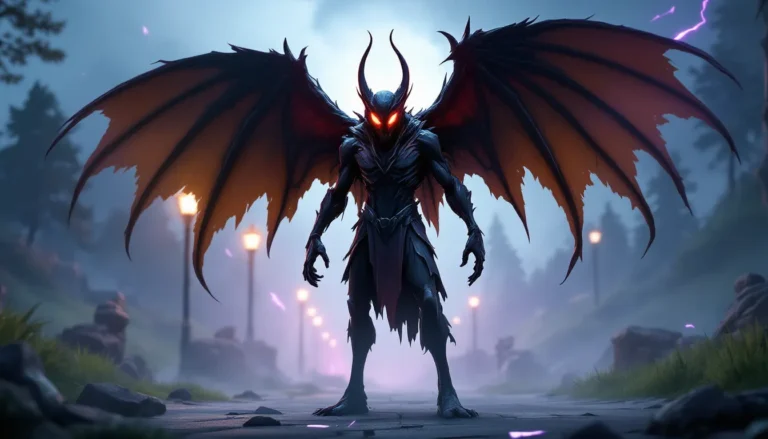
The headliner cosmetic is the Godzilla Evolved skin, modeled after the MonsterVerse version from Godzilla x Kong: The New Empire. The skin features reactive elements, dorsal spines glow brighter as you rack up eliminations, and the eyes shift from amber to blue when you’re in the final circle. The bundle also included a Mothra’s Wings back bling with animated particle effects.
Epic also released a Monarch Specialist skin set, featuring tactical military outfits inspired by the Monarch organization from the films. The set includes two variants (Urban Camo and Arctic Ops) with matching pickaxes styled after Monarch tech. Players who enjoyed exploring Fortnite on the Nintendo Switch appreciated that these skins maintained detail fidelity even on handheld mode.
Also, the Baby Godzilla pet back bling became an instant fan favorite. The miniature kaiju perched on your shoulder, occasionally roaring or breathing tiny atomic puffs during matches.
How to Unlock Godzilla Cosmetics and Items
Most Godzilla cosmetics were sold through the Item Shop in bundles:
- Godzilla Evolved Bundle (2,500 V-Bucks): Skin, back bling, pickaxe, and emote.
- Monarch Specialist Bundle (1,800 V-Bucks): Two skin variants, pickaxe, and contrail.
- Baby Godzilla (800 V-Bucks): Standalone pet back bling.
Event-specific challenges unlocked additional freebies. Completing the “Kaiju Chaos” quest line (which involved dealing damage as Godzilla, defeating AI Godzilla, and visiting Godzilla footprint locations) rewarded a loading screen, spray, and the Atomic Roar emote.
The Battle Pass for Chapter 6, Season 1, didn’t include Godzilla skins directly but offered bonus styles for existing skins if players completed crossover milestones. No exclusive styles locked behind real-money purchases, everything could be earned or purchased with V-Bucks.
Limited-Time Godzilla Game Modes and Features
Epic introduced two LTMs tied to the Godzilla event:
King of the Hill: Kaiju Edition pitted two teams of 20 against each other, with periodic Godzilla transformations spawning for both sides. Holding a central capture point while Godzilla-empowered players duked it out created absolute carnage. Matches lasted 15 minutes, and the team with the most capture time won.
Titan Takedown was a PvE mode where a squad of four faced off against increasingly difficult waves of Monarch soldiers and AI mini-bosses, culminating in a final Godzilla encounter with 10,000 HP. Teams earned medals based on completion time and performance, with Gold-tier clears granting bonus XP and a special banner icon.
Beyond LTMs, the standard Battle Royale modes featured dynamic Godzilla events. Every 10 minutes, an AI Godzilla would emerge from the ocean and march toward the center of the map, destroying everything in his path. Players could engage or avoid him, but his presence forced rotations and created unpredictable third-party scenarios. Reviews on GameSpot praised this dynamic as a refreshing shake-up to late-game pacing.
Creative mode also received Godzilla Prefabs, destroyable city blocks, kaiju-scale props, and scripted Godzilla NPCs that creators could integrate into custom maps. The community quickly churned out invasion scenarios, boss raid maps, and even rhythm game mods using Atomic Breath timing mechanics.
Map Changes and Godzilla Locations
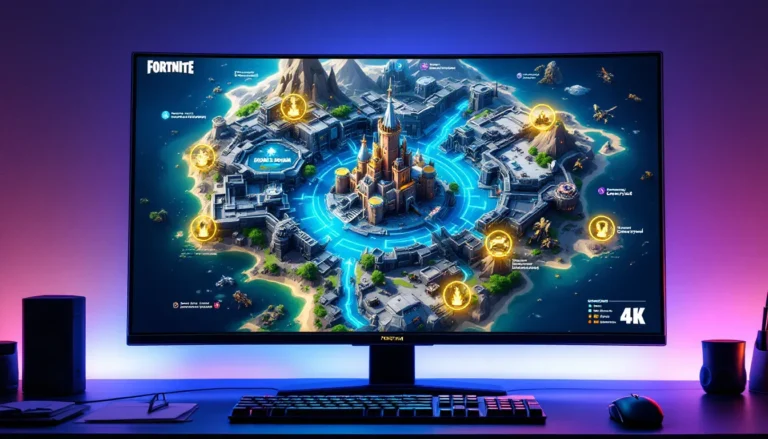
The event introduced semi-permanent map alterations that persisted throughout the three-week run. Monarch Outposts appeared at five locations: near Brutal Bastion, along the western coastline, south of Reckless Railways, in the forest east of Rebel’s Roost, and on a small island southeast of the main landmass.
Each outpost featured loot crates, ammo boxes, and NPCs selling Godzilla-themed items. More importantly, these were the most reliable spawn points for Monarch Transformation Devices. Savvy players memorized outpost rotations to maximize their chances of grabbing a device early.
Godzilla’s Footprints scarred the landscape as massive craters filled with glowing blue residue. Landing in a footprint granted a temporary speed boost and partial shield regeneration for 10 seconds. These footprints appeared randomly as AI Godzilla roamed, creating dynamic hot zones that shifted each match.
Coastlines saw the most dramatic changes. Sections of the beach were torn up, with jagged rock formations and smoldering debris scattered around emergence points, specific locations where AI Godzilla could spawn and exit the ocean. Tilted Towers (recently rebuilt in Chapter 6) took noticeable damage after the first week, with several buildings half-collapsed and on fire, reflecting Godzilla’s path through the city during scripted events.
These changes weren’t just cosmetic. Destroyed buildings offered new sightlines for snipers, footprint craters provided cover in previously open fields, and Monarch Outposts became contested landing zones comparable to Mythic POIs from previous seasons.
Community Reactions and Highlights
The Fortnite community went ballistic (in a good way) over the Godzilla event. Content creators flooded YouTube and Twitch with highlight reels of absurd Godzilla plays, one popular clip showed a player transforming with 3 players remaining, using Atomic Breath to delete the final circle’s cover, and securing a Victory Royale without firing a single bullet as a human.
Social media lit up with clips of AI Godzilla accidentally third-partying build fights, his Ground Pound collapsing entire structures mid-battle and eliminating everyone inside. The chaotic unpredictability became a meme format, with players captioning “POV: You hear boss music” over footage of Godzilla emerging from the ocean during their looting phase.
Creative mode saw an explosion of Godzilla-themed maps. “City Defense Simulator” by creator KaijuKrafter accumulated over 2 million plays, tasking squads with holding out against waves of mini-Godzillas using Monarch weapons. “Atomic Dodgeball” turned Godzilla’s breath into a PvP mechanic, with players taking turns firing beams while others tried to evade in a shrinking arena.
Criticism did surface about balance. Competitive players argued that RNG-based Godzilla transformations in late-game circles created unfair advantages, and Epic responded by disabling transformation devices in Arena and ranked modes after the first week. Casual playlists kept them active, preserving the chaotic fun for the majority playerbase.
Pro players had mixed takes. Some embraced the novelty and streamed “Godzilla-only” challenges, while others stuck to Arena to avoid the randomness. Regardless, engagement metrics spiked, Epic reported a 35% increase in daily active users during the event’s first week compared to the prior month.
Conclusion
The Fortnite Godzilla collaboration proved that Epic still has the creative chops to deliver crossovers that transcend simple skin drops. By integrating Godzilla as both a playable power fantasy and a dynamic environmental threat, the event reshaped how matches played out and gave players genuinely novel experiences.
Whether you dominated lobbies by mastering the 90-second transformation window, coordinated squad wipes on AI Godzilla for Mythic loot, or just enjoyed watching the King of Monsters casually demolish Tilted Towers mid-match, the event left its mark. The cosmetics are slick, the gameplay mechanics were surprisingly well-tuned (post-Arena nerf), and the community content that emerged will keep the collab’s spirit alive long after the event ended.
If you missed the event, keep an eye on Epic’s patterns, major collabs like this occasionally return with tweaks or “encore” runs. And if you’re still riding the Fortnite wave, there’s always more content to explore in the broader ecosystem. The Godzilla event raised the bar for what crossovers can be when they commit to gameplay integration over superficial tie-ins.