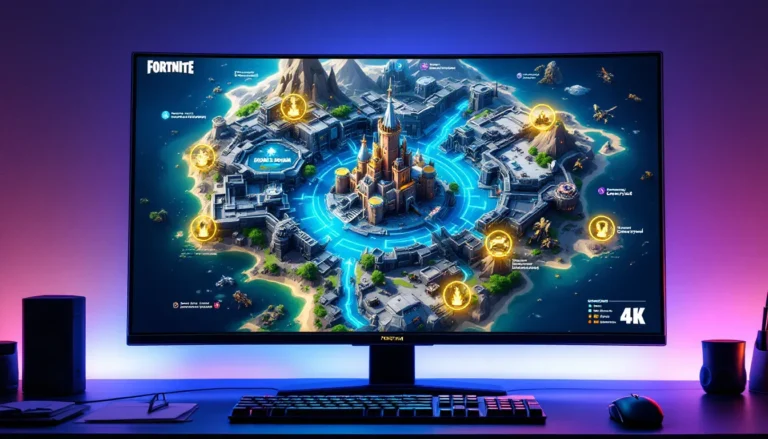
When Epic Games introduced zero build as a limited-time mode back in March 2022, plenty of players dismissed it as a gimmick. Fast forward to 2026, and Fortnite’s no-build variant has become a permanent fixture with its own dedicated player base, competitive scene, and meta strategies. For players who spent years mastering turbo-building only to get outclassed by 12-year-olds cranking 90s at inhuman speeds, zero build offered a fresh start. For newcomers intimidated by Fortnite’s notorious building mechanics, it finally removed the barrier that kept them from enjoying the game.
Zero build Fortnite strips away the core mechanic that defined the battle royale since 2017, forcing every player, casual and competitive alike, to rethink how they approach combat, rotations, and positioning. It’s not just “Fortnite without building.” It’s a fundamentally different game that rewards map knowledge, movement tech, and raw gunplay over muscle memory edit courses. Whether you’re returning after years away or diving in for the first time, this guide covers everything you need to dominate zero build mode in 2026.
Table of Contents
ToggleKey Takeaways
- Fortnite Zero Build mode strips away building mechanics entirely, replacing them with an overshield system, enhanced movement tech, and repositioning-focused gameplay that rewards positioning and gunplay over mechanical building skill.
- Zero Build has become a permanent game mode with dedicated competitive tournaments and a lower skill barrier for new players, attracting millions from traditional shooters like Apex, Warzone, and PUBG who find gunplay and strategy more accessible than build mode.
- Master the overshield recharge system (50-point regenerating shield) by strategically peeking, dealing damage, then retreating for 6 seconds to reset—this hit-and-run approach separates casual players from competitive zero build professionals.
- Position yourself two circles ahead by planning rotation routes through natural cover, avoiding open fields, and securing high ground strategically, as zero build offers no instant defensive building to save poor positioning decisions.
- Load out with a shotgun, SMG, assault rifle, healing items, and mobility utility like Shockwaves—carrying pure weapons without utility is a common mistake that costs late-game placements and prevents escape from third parties.
What Is Fortnite Zero Build Mode?
Fortnite Zero Build is exactly what it sounds like: a permanent game mode where building structures is completely disabled. Players can’t place walls, ramps, floors, or roofs, the core defensive and offensive tools that defined traditional Fortnite gameplay. Instead, Epic compensated by introducing new movement mechanics and a rechargeable overshield system to keep combat dynamic without turning every fight into a shooting gallery.
The mode launched as a limited-time event during Chapter 3 Season 2 in March 2022, titled “Resistance.” Player response was overwhelming. Within weeks, Epic made it permanent, splitting the Fortnite ecosystem into two distinct modes: Build and Zero Build. Each has its own matchmaking pool, competitive tournaments, and even separate balance adjustments for certain weapons.
How Zero Build Changed Fortnite Forever
Zero build didn’t just remove building, it forced Epic to redesign fundamental systems. The overshield mechanic, which provides a 50-point regenerating shield layer above your regular shields, became the primary defensive tool. Movement got a complete overhaul with tactical sprinting (introduced in Chapter 3), mantling over obstacles, and tactical sliding for quick repositioning.
Map design also shifted. POIs (points of interest) in zero build suddenly mattered more than ever. Natural cover, building interiors, and terrain elevation became critical tactical elements rather than temporary obstacles players could build over. Epic started designing maps with zero build in mind, adding more multi-story structures, natural rock formations, and destructible cover that respawns.
The competitive scene adapted too. By Chapter 5 Season 2 (current as of early 2026), zero build has its own FNCS (Fortnite Champion Series) events with prize pools comparable to traditional build tournaments. Pro players who never touched Fortnite because of the building barrier, especially those coming from Apex Legends, Warzone, and PUBG, found a new home.
Key Differences Between Zero Build and Traditional Fortnite
Beyond the obvious lack of building, several core differences define zero build:
- No resource farming: Harvesting materials is completely removed. Your pickaxe still breaks objects for loot, but there’s no wood, brick, or metal to collect.
- Overshield system: Every player spawns with a 50-point overshield that recharges after a few seconds out of combat. It’s your primary defensive layer.
- Enhanced movement: Sprinting is unlimited (no stamina system), mantling lets you climb ledges up to two stories high, and tactical sliding provides burst mobility.
- Weapon balance differences: Some weapons deal different damage in zero build vs. build mode. For example, the Hammer Pump Shotgun dealt 116 base damage in build mode during Chapter 5 Season 1 but was adjusted to 108 in zero build to prevent one-shot metas.
- Storm damage scaling: The storm deals identical damage in both modes, but positioning matters more in zero build since you can’t build emergency cover during late-game rotations.
- Victory Royale pacing: Matches tend to be slightly faster. Without build fights extending engagements, third-partying is more prevalent and final circles move quicker.
Why Zero Build Mode Has Become So Popular
Zero build’s explosion in popularity wasn’t just marketing hype. It addressed fundamental pain points that kept millions of potential players away from Fortnite while offering veterans a different competitive experience.
Lower Skill Barrier for New Players
Let’s be honest: Fortnite’s building skill ceiling is absurd. A new player in 2023-2024 faced opponents who’d been practicing edit courses and build mechanics for five-plus years. The gap between casual and skilled builders became so wide that newcomers got destroyed before they could learn basic gunplay.
Zero build flattened that learning curve dramatically. New players can focus on fundamental battle royale skills, looting efficiently, rotating smartly, and landing shots, without worrying about getting trapped in a box by someone with 10,000 hours of Creative mode practice. According to esports coverage from major outlets, zero build brought back lapsed players who’d quit during the turbo-building era and attracted an entirely new demographic who’d never touched Fortnite.
The mode’s accessibility shows in the numbers. Epic hasn’t released official player counts, but queue times for zero build consistently match or beat traditional modes across all regions and skill brackets. Console players, especially, gravitated toward zero build since building on controller was always more difficult than on mouse and keyboard.
Emphasis on Gunplay and Positioning Over Building
For players coming from other shooters, zero build feels more familiar. Gunfights reward tracking, flicking, and positioning rather than defensive building and edit speed. If you’ve got good aim from playing Apex, Valorant, or Call of Duty, those skills transfer directly.
Positioning became the new skill ceiling. In build mode, bad positioning could be compensated with quick builds. In zero build, getting caught in the open often means death. Players who master map rotations, natural cover usage, and high ground control dominate lobbies. The strategic depth shifted from mechanical execution to game sense and decision-making.
This emphasis attracted competitive players from other battle royales. Former Warzone pros, PUBG veterans, and Apex grinders found they could compete in Fortnite without relearning muscle memory for an entirely different mechanical system. The crossover has enriched the competitive scene with diverse playstyles.
Essential Gameplay Mechanics in Zero Build
Mastering zero build requires understanding the replacement mechanics Epic introduced. These aren’t just quality-of-life features, they’re the new skill expression tools that separate good players from great ones.
Understanding the Overshield System
The overshield is a 50-point regenerating shield layer that sits above your regular health and shields. It appears as a white bar in your HUD and recharges automatically after 6 seconds without taking damage. Here’s what you need to know:
- Overshield takes damage before regular shields and health
- Recharge rate is roughly 15 points per second once it starts
- Any damage taken resets the 6-second recharge timer
- Overshield Kegs (consumable items found as floor loot and in chests) instantly restore overshield to full
- The mechanic rewards disengaging and resetting fights rather than constantly trading damage
Smart players use the overshield recharge window strategically. Peek, deal damage, retreat behind cover for 6-8 seconds to fully recharge, then re-engage. This hit-and-run style punishes opponents who chase aggressively without securing the elimination.
Some healing items interact uniquely with overshield. Shield Kegs restore regular shields but don’t affect overshield. Med-Mist heals health over time but won’t touch shields or overshield. Always prioritize your overshield state before committing to extended fights.
Movement Abilities: Sprinting, Mantling, and Tactical Sliding
Tactical Sprint lets you run significantly faster than base movement speed with no cooldown or stamina cost. The trade-off? Your weapon is holstered while sprinting, meaning you need a split-second to draw before firing. Smart players use sprint for rotations and disengages but walk or jog when approaching contested areas where reaction time matters.
Mantling (also called clamber) allows you to climb onto ledges, rooftops, and elevated terrain up to approximately 2.5 player heights. Just sprint toward a ledge and you’ll automatically pull yourself up. This mechanic changed vertical mobility completely. POIs with multiple floors became significantly more accessible, and high ground is easier to contest without builds.
Key mantling tips:
- You’re vulnerable during the mantle animation, don’t climb into a sightline where enemies are watching
- Mantling makes a distinct audio cue that experienced players listen for
- You can mantle while taking damage, unlike building which requires a brief action window
- Combining slide into mantle extends your vertical reach slightly
Tactical Sliding activates by crouching while sprinting. You’ll slide forward for several meters, maintaining most of your sprint momentum. Sliding is crucial for:
- Breaking opponent tracking during gunfights
- Quickly entering or exiting doorways
- Sliding down hills to move faster than sprinting
- Dodging sniper shots when crossing open areas
- Sliding into cover when your overshield breaks
Advanced players chain sprint → slide → mantle to cover ground rapidly while presenting a harder target. The movement skill ceiling in zero build is surprisingly high once you start optimizing these mechanics.
Parkour and Climbing Techniques
Beyond the basic movement tools, environmental traversal became an art form. Experienced zero build players know every climbable surface, every shortcut, and every sightline on the map. When adjusting settings for optimal performance on console, many players boost their field of view to better spot parkour routes during rotations.
Some advanced techniques:
- Bounce pad chains: Using multiple bounce pads in sequence to cross the map faster than sprinting
- Roof running: Many POI rooftops connect, letting you traverse entire areas without touching the ground where most fights happen
- Water sliding: Sliding into water maintains your momentum briefly, useful for quick river crossings
- Zipline combat: Unlike building mode where ziplines are death traps, they’re viable rotation tools in zero build if used during third-party chaos
- Vehicle preservation: Keeping a dirt bike or car nearby for storm rotations is more valuable in zero build since you can’t build ramps or bridges
The best players treat the map like a parkour course, identifying the fastest and safest routes between circles before the storm forces desperate rotations.
Best Strategies for Winning in Zero Build Mode
Raw mechanical skill will only carry you so far in zero build. The mode rewards strategic thinking, patience, and game sense over pure aim. Here’s how to approach matches for consistent top placements.
Mastering Map Positioning and Rotations
In zero build, positioning is everything. Good players think two circles ahead, planning rotation routes that maximize natural cover and minimize exposure. Here’s the strategic framework:
Early game (circles 1-3):
- Land at POIs on the edge of the bus path, not directly under it
- Loot fast, then rotate toward circle center rather than edge
- Identify tall structures and natural high ground you can hold later
- Secure a vehicle if available, but don’t over-rely on it
Mid game (circles 4-6):
- Position toward the next predicted circle rather than dead center of current circle
- Hold buildings with multiple exits and vertical levels
- Avoid open fields and low ground with no nearby cover
- Listen for gunfights and rotate away from contested areas unless you’re confident third-partying
Late game (circles 7-10):
- High ground is king, but exposed high ground gets you targeted by multiple opponents
- Stay near natural cover (rocks, trees, buildings) rather than open hills
- Keep heals and overshield kegs ready for the final 1v1 or 1v1v1
- Watch storm timer closely, you can’t build emergency cover for late rotations
The biggest rotation mistake is staying in contested POIs too long. By the time circle 2 closes, you should already be positioned for circle 3. The extra 30 seconds of looting isn’t worth getting caught in a desperate sprint through the storm.
Using Natural Cover and Terrain to Your Advantage
Without building, environmental awareness separates average players from top-tier competitors. Every rock, tree, wall, and hill becomes a tactical tool. Based on recent gaming strategy discussions, professional zero build players spend hours in Creative studying map geometry and cover angles.
Natural cover hierarchy (best to worst):
- Solid structures with multiple angles (buildings, large rocks, vehicles): Provide 360-degree protection and multiple peek angles
- Trees and thick foliage: Break sightlines and make you harder to spot but don’t stop bullets
- Terrain elevation changes (hills, ditches): Force opponents to expose themselves to shoot you
- Destructible cover (fences, small walls): Better than nothing but breaks after a few shots
Pro tip: Always fight with your back to cover and your opponent exposed. If you’re in a building and someone’s outside, hold angles from windows rather than stepping out. If you’re forced to push someone in better position, use smokes, shockwaves, or wait for a third party to distract them.
Learn which cover is “tall cover” that protects you while standing versus “short cover” that requires crouching. This matters during heal-offs and when your overshield is recharging.
When to Engage vs. When to Retreat
The most common mistake in zero build is taking every fight. Without building to disengage, committing to a bad engagement often means death or getting third-partied while healing. Here’s the decision matrix:
Engage when:
- You have significant health/shield advantage (they’re weak from another fight)
- Positioning favors you (you have cover, they’re exposed)
- You have utility to close distance or disengage (shockwaves, impulses, rift-to-go)
- It’s late game and you need better loot or positioning
- You can secure a quick elimination (under 3-5 seconds of exposure)
Retreat when:
- You’re outnumbered without third-party support
- Storm is approaching and fighting will trap you
- Your overshield is broken and theirs isn’t
- You hear multiple other teams nearby (third party incoming)
- You have poor position (low ground, no cover, open field)
Mid-tier players fight too much. Top players maximize value from each fight and avoid 50/50 engagements. Your goal isn’t 20 eliminations, it’s Victory Royale. Sometimes that means letting a team pass and taking top 3 with 2 kills.
Optimal Weapon Loadouts for Zero Build
Loadout strategy in zero build differs significantly from build mode. Since you can’t build defensive cover mid-fight, you need weapons that work at multiple ranges and utility items that provide positioning advantages.
Best Weapons for Close-Range Combat
Close-quarters combat happens fast in zero build. Most fights under 10 meters are decided in under two seconds. Here are the top choices as of Chapter 5 Season 2:
Shotguns:
- Hammer Pump Shotgun (Mythic/Legendary): 108 base damage, tight spread, punishes good aim. Two-shot potential against full health opponents.
- Havoc Pump Shotgun: Slightly lower damage (100/96 depending on rarity) but more forgiving spread. Better for players with inconsistent aim.
- Auto Shotgun: Lower per-shot damage (~75) but forgiving fire rate. Solid choice for console players or anyone who struggles with pump timing.
SMGs:
- Thunder Burst SMG (Mythic): Exceptional DPS, shreds overshield instantly. The current SMG meta king.
- Combat SMG: Reliable, controllable recoil, available in most matches. Pairs well with any shotgun.
- Hyper SMG: Highest fire rate but difficult recoil pattern. Best for PC players with good tracking.
Recommended close-range loadout slot: One shotgun + one SMG covers all close-range scenarios. Shotgun for peek shots and burst damage, SMG for sustained DPS and overshield breaking.
Top Mid to Long-Range Options
Zero build rewards poke damage and long-range pressure since opponents can’t instantly build cover. Mid-range weapons see more use here than in traditional Fortnite.
Assault Rifles:
- Nemesis AR (Mythic): Charge-up mechanic rewards pre-firing angles. Devastating at 30-50 meters.
- Ranger Assault Rifle: Excellent first-shot accuracy, rewards tap-firing for long range. Your sniper alternative if you can’t find one.
- Combat AR: Faster fire rate, better for spray-and-pray. Less punishing if you miss shots.
- Hammer AR: Solid all-rounder, reliable at 15-40 meters. Most forgiving bloom pattern.
Snipers and marksman rifles:
- Bolt-Action Sniper: One-shot headshot potential (212 damage on Legendary). High skill ceiling but match-winning in the right hands.
- Hunting Rifle: Faster fire rate than bolt-action, no scope glint. Better for aggressive players.
- Designated Marksman Rifle (DMR): Semi-auto, solid body shot damage. Pressure tool for poking enemies behind cover.
Players focused on competitive Switch gameplay often skip snipers due to the difficulty of hitting shots on smaller screens and lower frame rates, opting for double AR or AR/DMG combos instead.
Explosive/Splash damage:
- Cluster Clingers: Stick to surfaces, explode into multiple smaller explosives. Great for flushing enemies from buildings.
- Rocket Launchers (rare drop): Zone control and structure destruction. Forces opponents out of cover.
Must-Have Utility Items and Consumables
Utility often determines late-game outcomes more than weapon choice. Always dedicate at least one slot, preferably two, to utility and heals.
Mobility:
- Shockwave Grenades: Disengage from bad fights, push opponents off high ground, or rotate through storm. S-tier utility.
- Rift-to-Go: Instant reposition, can’t be countered. Rare but game-changing.
- Grapple Blade (Chapter 5 Season 2): Melee weapon that provides movement utility. Unique slot efficiency.
Healing priority (best to worst):
- Chug Splash: Heals health and shields for you and teammates in area. Most efficient healing.
- Med-Mist: Heal over time while moving. Doesn’t lock you in animation.
- Overshield Keg: Instantly restores overshield layer. Crucial for late game.
- Shield Kegs/Small Shield Potions: Fast shield restore but doesn’t touch overshield.
- Bandages/Medkits: Health only. Pick up if nothing better available.
Ideal loadout structure:
- Shotgun
- SMG
- AR or Sniper
- Heals (Med-Mist or Chug Splash)
- Utility (Shockwave or Overshield Keg)
This gives you close, mid, and long-range options plus survivability and repositioning tools. Adjust based on playstyle, aggressive players might run double close-range weapons, while passive players might carry extra heals.
Advanced Tips and Tricks for Zero Build Players
Once you’ve mastered the basics, these advanced techniques will push you into top-tier lobbies and competitive placement.
Audio Cues and Visual Awareness
Sound design in Fortnite is directional and layered. Experienced players gather massive amounts of information from audio alone:
Critical audio cues:
- Footsteps: Indicate player proximity and direction. Sprinting is louder than walking, which is louder than crouching.
- Mantling/climbing: Distinct scraping sound when someone pulls themselves up a ledge.
- Chest/loot opening: Means someone’s looting nearby. If you hear multiple chests opening, there’s likely a full squad.
- Sliding: Produces a unique sound, tells you someone’s moving at speed (likely repositioning or running away).
- Reload sounds: Each weapon has a distinct reload audio. Experienced players recognize when opponents are vulnerable.
- Overshield recharging: Makes a subtle humming sound when it starts regenerating. Listen for this during standoffs.
- Healing items: Each consumable has unique audio. Shield potion drinking sounds different from medkit application.
Visual awareness tips:
- Constantly scan the horizon for movement. In zero build, players can’t hide behind instant builds, making visual spotting more reliable.
- Watch for muzzle flash, especially at night or in shaded areas.
- Destroyed trees and structures indicate recent player activity.
- Birds flying up from trees sometimes indicate player movement below.
- Opened doors and broken windows tell you someone’s already looted that building.
- Look for the small dust cloud when someone lands from a jump or mantle.
Many competitive players boost visual audio settings and enable visualize sound effects (the accessibility feature that shows directional indicators) for additional awareness.
Third-Party Strategies and Clean-Up Tactics
Third-partying is more prevalent in zero build since fights can’t be extended by defensive building. According to analysis from competitive gaming coverage, top players in zero build tournaments average 40% higher third-party engagement rates compared to build mode.
When to third-party:
- You hear extended gunfire (15+ seconds), meaning both teams are low and healing
- You have positional advantage (high ground or flanking angle) on the fight
- You’re confident you can secure at least one elimination quickly
- Storm isn’t forcing you to rotate away
- You have enough heals to sustain another fight afterward
How to execute clean third-parties:
- Wait until one team is eliminated or both are healing
- Push immediately during the heal window, don’t give them time to reset
- Target the weaker team first (whoever has less cover or lower health)
- Use explosives or spray weapons to pressure multiple angles
- If the second team is competent, disengage if you don’t secure quick elims
Avoiding getting third-partied:
- End fights as quickly as possible (under 20 seconds ideal)
- Don’t chase eliminations into bad positions
- Listen constantly for approaching footsteps or vehicles during fights
- If you hear third party approaching, immediately shift to defensive position or disengage
- Carry mobility specifically for third-party escapes
The best players view every engagement through the lens of “how vulnerable does this make me to third parties?” If the answer is “very,” they reconsider the fight.
Storm Management and Final Circle Positioning
Storm timing is less forgiving in zero build. You can’t build ramps over mountains or construct bridges across gaps, so your rotation path matters more.
Storm damage by circle (Chapter 5 Season 2):
- Circle 1: 1 DPS
- Circle 2: 1 DPS
- Circle 3: 2 DPS
- Circle 4: 5 DPS
- Circle 5: 8 DPS
- Circle 6+: 10 DPS
Circles 5+ require perfect timing. Even with full heals, you can’t outheal 10 DPS for long. Plan rotations 30-45 seconds before storm closes, not at the last second.
Final circle strategies:
For end-game circle (10-15 players remaining):
- Secure the best cover in the current circle before the next one forms
- High ground advantage is more valuable than in build mode since it can’t be instantly countered
- Hold natural chokepoints that force others through your sightlines
- Save at least one mobility item (Shockwave, Rift, Grapple) for the final rotation
- Don’t shoot unless you can secure an elimination or the target is a serious threat, every shot reveals your position
For final 1v1 scenarios:
- If you have better position, force them to come to you
- If they have better position, create chaos with explosives or smoke to reposition
- Track overshield states, if yours is up and theirs isn’t, that’s 50 HP advantage
- Right-hand peek advantage matters more in zero build (character model peeks further from right side)
- In moving circles, position so storm pushes opponents toward you, not vice versa
Common Mistakes to Avoid in Zero Build
Even experienced players make these errors. Recognizing and correcting them will immediately improve your placement and win rate.
Fighting every enemy you see: The “Call of Duty syndrome.” Just because you spotted someone doesn’t mean you need to engage. Pick your fights based on strategic value, not kill count.
Ignoring overshield management: New players treat overshield like regular shields. It’s not. The recharge mechanic means peeking, dealing damage, then resetting is more valuable than extended trades. Respect the 6-second recharge timer.
Looting too long in POIs: By the time you’ve searched every chest and ammo box, the circle’s closing and better players have already secured advantageous positions. Loot efficiently, then rotate. You’ll find more loot off eliminated players anyway.
Running in straight lines across open areas: Without building to create cover, you’re target practice. Use tactical sprint in bursts, slide randomly, and serpentine when crossing danger zones. Better yet, rotate around open areas rather than through them.
Holding low ground passively: Low ground in zero build is a death sentence against competent players. If you find yourself in low ground, either aggressively mantle to contest or rotate away. Sitting still in a ditch won’t save you.
Not carrying utility items: Players coming from other shooters often run pure weapon loadouts (shotgun, SMG, AR, sniper, second AR). In zero build, that’s a mistake. Mobility and heals often determine top 10 placement more than having an optimized weapon for every range.
Chasing eliminations into buildings: If someone runs into a multi-story building, don’t blindly follow. They’ll either a) hold an angle and one-shot you as you enter, or b) escape out another exit while you’re searching. Eliminate them in open areas or disengage.
Forgetting third parties exist: In build mode, defensive building gives you time to react to third parties. In zero build, a third party means you’re fighting two directions with no way to create instant cover. Always position with third parties in mind.
Poor storm awareness: Players die to storm more in zero build than build mode because they can’t build emergency cover or ramps to escape. Check storm timer every 30 seconds. When it shows under 1 minute, start planning your route.
Neglecting audio cues: Fortnite’s audio is information-rich. Players who game without headphones or ignore footsteps and reload sounds miss critical data. Audio often reveals enemy positions before visual confirmation.
Fixing even two or three of these mistakes will boost your average placement significantly. Most players stuck in mid-tier lobbies make 4-5 of these errors every match.
Zero Build vs. Build Mode: Which Should You Play?
This isn’t a “which is better” debate, they’re fundamentally different games that appeal to different preferences and skill sets. Here’s how to decide which fits you.
Play Zero Build if you:
- Come from traditional shooters (Apex, Warzone, PUBG, Valorant) and want gunplay to matter most
- Find building mechanics frustrating, overwhelming, or uninteresting
- Prefer strategic positioning and game sense over mechanical execution
- Play on console or mobile where building is harder to execute
- Want shorter, more aggressive matches with less defensive stalling
- Enjoy the chaos of third-party fights and fast rotations
- Haven’t played Fortnite in years and feel overwhelmed by the building skill gap
Play Build Mode if you:
- Love high skill-ceiling mechanical gameplay and constant improvement
- Enjoy defensive counterplay and the ability to reset fights with building
- Want longer, more methodical matches where patience is rewarded
- Prefer having defensive tools to counter aggressive pushes
- Like Creative mode, edit courses, and mechanical practice
- Find zero build too “RNG-dependent” based on circle positioning
- Already have thousands of hours of building muscle memory
Can’t decide? Play both. Many competitive players maintain separate practice routines for each mode. Zero build improves your raw aim, positioning, and decision-making. Build mode sharpens mechanical speed and creative problem-solving. Skills from each mode transfer surprisingly well.
For players exploring the broader Fortnite content ecosystem, experimenting with both modes helps you understand why the game has maintained its dominance in the battle royale space for nearly a decade. Each offers unique strategic depth.
The beauty of 2026 Fortnite is that you don’t have to choose permanently. Queue into zero build when you want to focus on shooting and positioning. Queue into build mode when you want mechanical expression and defensive counterplay. Epic’s decision to maintain both as permanent, equally supported modes means the Fortnite ecosystem accommodates almost every playstyle.
Conclusion
Zero build Fortnite has evolved from experimental limited-time mode to a permanent pillar of the game’s identity. It removed the barrier that kept millions of players away while creating an entirely new competitive ecosystem with its own meta, strategies, and skill expression.
Success in zero build comes down to mastering what replaced building: overshield management, advanced movement tech, intelligent positioning, and strategic decision-making. The best players don’t just aim better, they think two circles ahead, choose fights that maximize value, and leverage natural cover like it’s second nature.
Whether you’re a returning player who bounced off Fortnite’s building complexity years ago, a shooter veteran curious about battle royale, or someone who simply wants to focus on gunplay over construction, zero build offers a complete, competitive experience. The mode isn’t going anywhere, and with Epic continuing to balance and refine it alongside traditional Fortnite, 2026 is the best time to master it.
Now get in a match and put these strategies to work. Your first Victory Royale is waiting, no building required.